 Thai
ThaiMedium · Hot
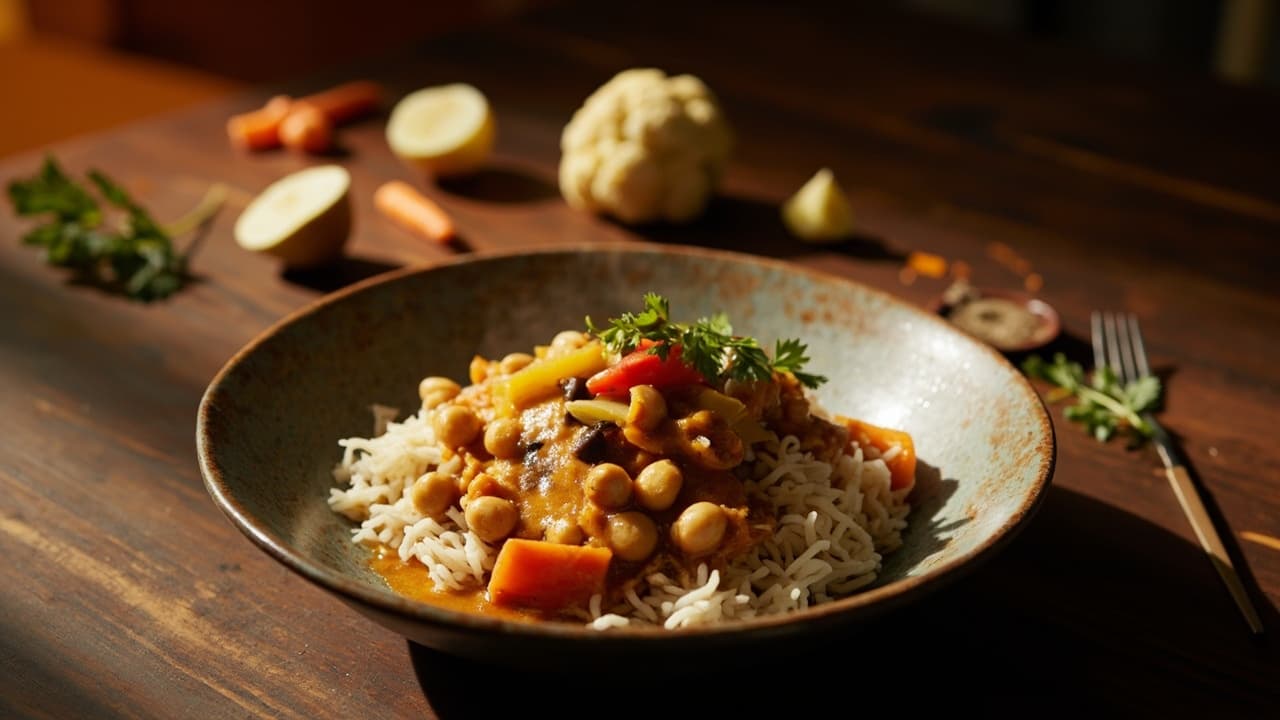
Chickpea and Vegetable Curry with Coconut Rice
A hearty, umami-rich chickpea and vegetable curry with warm spices, served alongside fluffy coconut-infused rice. A perfect weeknight bridge between South Asian and tropical flavors.

Prep
20 min
Cook
35 min
Rest
5 min
Total
1h
Method
Prep
1
Drain and rinse the chickpeas. Peel and dice the yellow onion. Mince the garlic and finely grate the ginger. Peel and slice the carrots into half-moons, dice the potato into 1-inch cubes, cut the cauliflower into small florets, and slice the bell pepper into strips.
2
Rinse the jasmine rice under cold water until the water runs clear. This removes excess starch and prevents the rice from becoming gummy.
Coconut Rice
3
Combine the rinsed rice, coconut oil, salt, and 2.25 cups of water in a medium saucepan. Bring to a boil over high heat.
4
Once boiling, reduce the heat to low, cover tightly with a lid, and cook for 15 minutes. Remove from heat and let steam, covered, for 5 minutes. Fluff with a fork and set aside.
Build the Curry Base
5
Heat the coconut oil in a large wok or deep skillet over medium-high heat. Add the diced onion and cook, stirring occasionally, until softened and lightly golden, about 5–6 minutes.
Bloom the Spices
7
8
Stir everything together in the wok. The spices should coat the onions — this paste is your flavor foundation.
Simmer the Curry
9
10
Add the cauliflower florets and bell pepper strips. Stir to combine, cover, and simmer for another 8 minutes until the vegetables are tender but not mushy.
Serve
12
Ladle the chickpea and vegetable curry over a generous mound of coconut rice in shallow bowls. The contrast of the creamy, spiced curry against the subtle sweetness of the coconut rice is the whole point — Kenji's favorite kind of bridge.
Grade pending
Nutri-Score
Estimated nutrition
Grade pending · 100% ingredient coverage
Calories
1342
per serving
Protein
53g
Carbs
224g
Fat
29g
Sat. fat
16g
Fiber
27g
Sugar
7g
Sodium
1355mg
High FiberPlant ProteinIron RichVitamin CVitamin A
Nutri-Score is a general nutritional-balance guide, not medical or dietary advice.
Grade pending
Environmental impact
Estimated footprint
Grade pending · 100% ingredient coverage
kg CO2e
0.9
per serving
Water
1.4m³
Runoff
0.1g P
Chickpeas drives 39% of this recipe’s estimated footprint.
Carbon from Poore & Nemecek 2018; water, land & runoff from Agribalyse — modelled averages for comparing recipes, not a measurement of your groceries.
Flavor Profile
8
Umami
4
Sweet
6
Salty
2
Sour
2
Bitter
5
Spicy
Textures
TenderCreamyFluffySaucy
Aromas
CoconutGarlickySpicedHerbalGingery
Kitchen Equipment
Primary Tool
WokWokRice CookerChef KnifeCutting BoardMixing BowlsMeasuring SpoonsLiquid Measuring CupPlastic WrapFine Mesh Strainer
Counter FootprintMedium
Techniques
Safety & Storage
Cross Contamination
Avoid using the same cutting boards, utensils, or serving dishes for allergen-sensitive individuals without proper sanitization between uses.
Cooking Temperature
{"classification":"cooking-temperature","text":{"text":"Ensure vegetables reach a minimum internal temperature of 165°F during simmer stage. Carrots and potatoes require full 10-minute simmer to achieve proper tenderness."}}
Handling
Practice proper hand washing before and after handling raw vegetables. Use separate cutting boards for vegetables if also handling allergen-containing ingredients.
Storage
Store leftover curry and rice separately in airtight containers. Refrigerate within 2 hours of cooking. Consume within 3-4 days or freeze for up to 3 months.
High Risk Population
For pregnant individuals or immunocompromised persons, ensure all vegetables are cooked thoroughly. Avoid consuming curry that has been left at room temperature for more than 2 hours.
Allergen Warning
Clearly label and separate this dish from allergen-containing foods during preparation and storage to prevent cross-contact with soy products.
Pro Tips
Technique
Bloom your spices in oil until they smell nutty and deeply aromatic — that's the Maillard reaction doing its thing, the same chemistry that makes toasted bread and seared meat smell so irresistible. If your spices don't bloom, your curry tastes flat. Trust the sizzle.
Substitution
No fresh ginger? Swap in ½ teaspoon ground ginger per inch of fresh — the flavor's a bit more one-dimensional but it'll get you close. Same goes for garlic: jarred minced works in a pinch, though I'd never tell your grandmother that.
From the chef
This curry is my kind of bridge — I'm talking about that moment when warm South Asian spice meets tropical coconut sweetness, and suddenly you're somewhere completely new but also totally comfortable. The chickpeas give you that meaty, satisfying bite that Americans love (think vegetarian answer to pulled pork vibes), while the spinach melts into all that spiced liquid like it belongs there. The coconut rice isn't just a sidekick either — it's the cool, creamy counterpoint that makes every bite interesting.
TagsWeeknight DinnerSpicyOne PotVegetarianCurryFusion
AllergensSoyGluten
Source: generated · June 10, 2026