 Nigerian
Medium · Hot
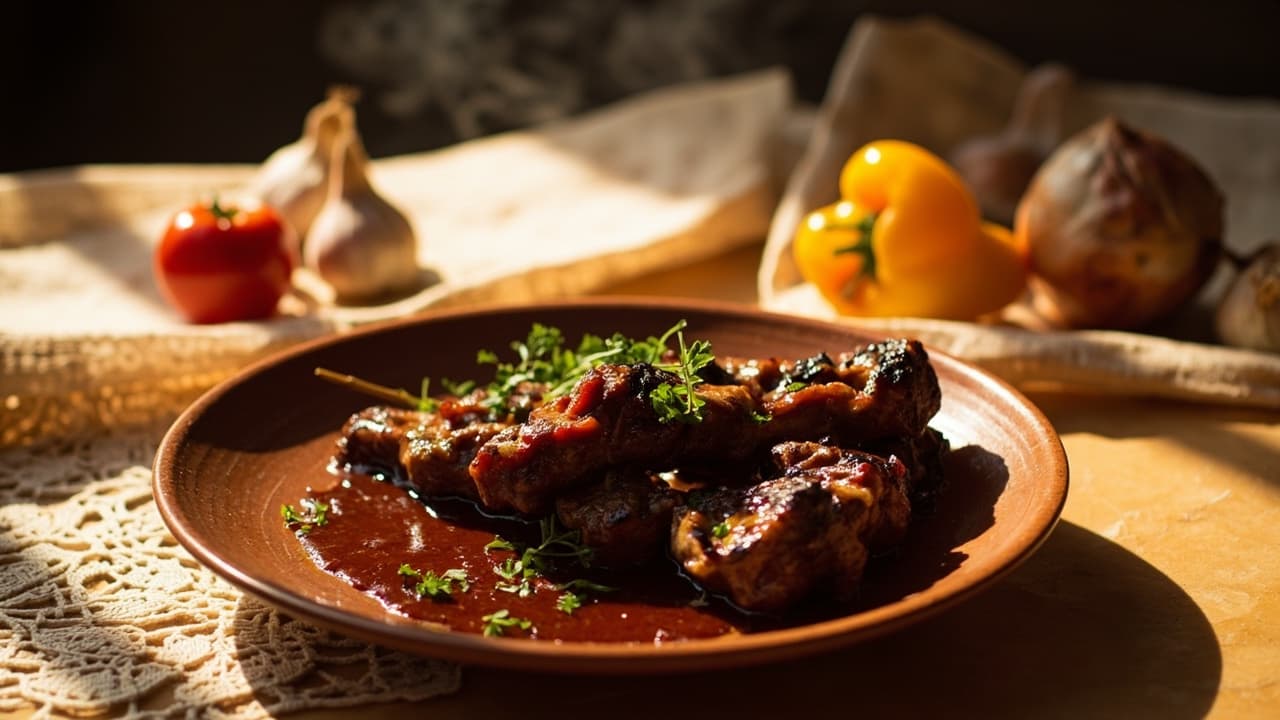
Slow-Smoked Tomato Beef with Bell Pepper
Tender beef slow-smoked over charcoal and glazed with a fragrant tomato-bell pepper sauce, seasoned with aromatic spices that honor the suya tradition.
Prep
20 min
Cook
2h
Total
2h 20m
Method
1
Pat the beef steak completely dry with paper towels. This is sacred work — patience here ensures the smoke will cling properly later.
2
Score the beef lightly on both sides with a knife, creating small channels for the spice rub to enter. Do not cut too deep; we want to honor the meat's structure.
3
Mix paprika, ground ginger, minced garlic, black pepper, salt, and 3 tablespoons olive oil into a fragrant paste. Rub this mixture into every scored surface and all sides of the beef. Place in a bowl, squeeze the lemon juice over, cover, and refrigerate for at least 2 hours — overnight is a blessing for deeper flavor.
4
Prepare your charcoal grill for indirect smoking: pile coals on one side and place a small aluminum pan with water on the other. Let the coals ash over and stabilize to a low heat around 120-140C. The smoke should be thin and sweet, never billowing.
5
Remove the beef from the refrigerator 30 minutes before cooking to take the chill away — cold meat shocks the smoke.
6
Place the marinated beef on the cooler side of the grill, away from direct flames. Add 2-3 chunks of hardwood smoke wood (or soaked wood chips in a foil pouch with holes) directly on the coals.
7
Slow-smoke the beef for 1 hour 15 minutes to 1 hour 30 minutes, maintaining grill temperature between 120-140C. Resist the urge to open the lid frequently — each peek releases precious smoke and heat. The beef is ready when it reaches an internal temperature of 63C for medium-rare to medium.
8
Remove the beef from the grill and tent loosely with foil. Let it rest for 10 minutes — this is not waiting, it is allowing the juices to find their home.
9
10
Place the charred vegetables in a bowl and cover with a plate for 10 minutes — the steam will loosen the skins. Peel, seed, and roughly chop them.
11
Heat 2 tablespoons olive oil in a cast iron skillet over medium heat. Dice the yellow onion and cook until softened and translucent, about 5 minutes.
12
Add the chopped charred tomatoes and bell peppers to the skillet along with the tomato sauce, honey, and soy sauce. Stir gently and simmer for 10-12 minutes until the glaze thickens and deepens in color. Season with salt and cayenne to taste — the glaze should balance sweet, savory, and a gentle heat.
13
Slice the rested beef against the grain into 1cm medallions. Fan the slices on a serving platter or lay them in a pool of the warm tomato bell pepper glaze.
14
Spoon the glaze generously over and around the beef. Scatter fresh chopped parsley across the top for color and a bright herbal note.
15
Serve immediately while the beef is still warm and the glaze is glistening. This dish speaks softly but carries deep flavor — let it be the conversation at your table.
A
Nutri-Score
Excellent balance
A–E · lower is better · score -2
Calories
838
per serving
High in protein · 55gLow sugar · 21gLow saturated fat · 9g
Protein
55g
Carbs
33g
Fat
57g
Sat. fat
9g
Fiber
7g
Sugar
21g
Sodium
1642mg
Heart HealthyLow CalorieHigh ProteinLow Carb
Nutri-Score is a general nutritional-balance guide, not medical or dietary advice.
E
Environmental impact
Very high impact
A–E · lower is better · includes estimates
kg CO2e
20
per serving
ECarbonCEU all-round· carbon sets the grade
Water
1.6m³
Land
400Pt
Runoff
0.3g P
Beef Steak drives 97% of this recipe’s estimated footprint.
Carbon from Poore & Nemecek 2018; water, land & runoff from Agribalyse — modelled averages for comparing recipes, not a measurement of your groceries.
Flavor Profile
8
Umami
6
Sweet
5
Salty
3
Sour
2
Bitter
4
Spicy
Textures
SilkyTender
Aromas
HerbalPungentSmokySweet
Kitchen Equipment
Safety & Storage
Cooking Temperature
Maintain grill temperature between 120-140C during smoking. Beef must reach internal temperature of 63C for medium-rare to medium. Use a calibrated meat thermometer to verify doneness.
Glaze should be simmered until it thickens and deepens in color, approximately 10-12 minutes, to ensure proper reduction and safe handling.
High Risk Population
Pregnant women, elderly individuals, young children, and immunocompromised persons should consume beef cooked to at least 71C (medium) or well-done to eliminate pathogens.
For pregnant women, elderly individuals, young children, and immunocompromised persons: use ground beef or fully tenderized beef cuts, or ensure whole beef cuts are cooked to 71C (160F) minimum. Consider using ground beef alternative for this recipe to ensure food safety for vulnerable populations.
Cross Contamination
Use separate cutting boards and utensils for raw beef during scoring and marinating. Never reuse marinade that has contacted raw meat unless boiled first.
Place charred vegetables in a clean bowl after peeling. Wash hands thoroughly after handling raw beef before touching other ingredients or cookware.
Handling
Remove beef from refrigerator 30 minutes before cooking to take the chill away — cold meat shocks the smoke and creates uneven cooking.
Storage
Leftover beef with glaze can be refrigerated in airtight containers for 3-4 days. Reheat to 74C minimum before serving.
Do not leave beef at room temperature for more than 2 hours. Discard any beef left in the temperature danger zone (4C-60C) for extended periods.
Equipment Safety
When adding hardwood smoke wood or wood chips to coals, use long-handled tongs. Allow charcoal to ash over and stabilize before placing meat on the grill.
Allergen Warning
This dish contains soy and gluten from soy sauce. Check sauce labels for specific allergen information. Tamari or liquid aminos may be used as gluten-free alternatives.
Charred vegetable skins should be blackened but not completely burnt. Excessive charring can produce harmful compounds. Peel off blistered skins before use.
Pro Tips
Technique
When you see the smoke shift from white to nearly invisible, that is when the magic deepens—your coals are at the perfect temperature and your wood is releasing its soul slowly, just as it should. Trust the silence of the grill more than the sound of sizzle.
Substitution
If you cannot find fresh bell peppers, two tablespoons of tomato paste stirred into the glaze along with a half teaspoon of sweet paprika can carry that roasted sweetness forward until peppers return to your kitchen.
From the chef
Slow-smoking is not a technique so much as an act of faith — you commit the beef to gentle charcoal heat and trust that time will do what force cannot. A fragrant paste of paprika, ground ginger, and garlic opens the meat's surface before it ever meets the coals, and ninety minutes of thin, sweet smoke draws those spices deep into the flesh. The charred tomatoes and bell pepper are the final conversation: blistered over the grate, then simmered with honey and soy until the glaze thickens to a burnished amber that clings to every slice. Patience here is not waiting — it is the whole method.
TagsSlow SmokedSuya InspiredSpicyTomato GlazeGrilledBeefMedium DifficultyMedium
AllergensSoyGlutenWheat
Source: generated · June 12, 2026