 Moroccan
Medium · Hot
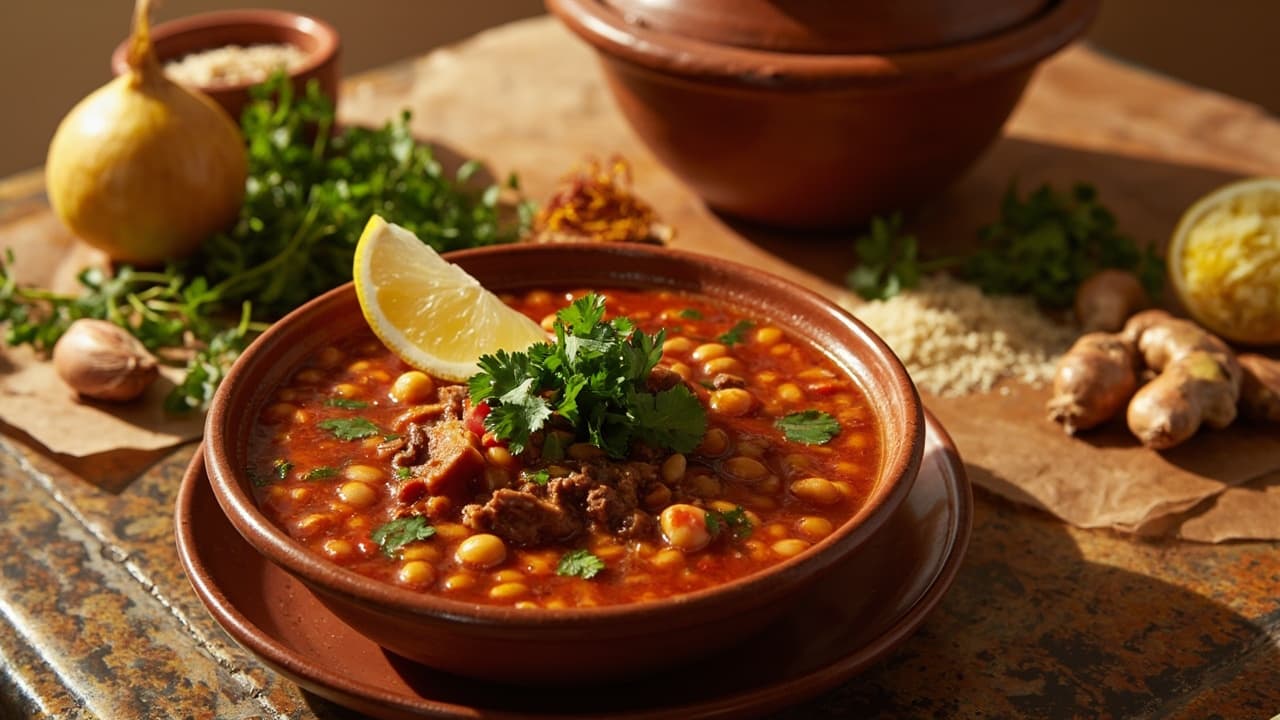
Harira Soup with Saffron and Lemon
A rich, aromatic Moroccan tomato soup with lentils, chickpeas, and tender beef, perfumed with saffron, warming spices, and bright lemon. This is the soup of celebration — slow-cooked to develop deep, layered flavors.
Prep
15 min
Cook
45 min
Rest
10 min
Total
1h 10m
Method
Bloom the Saffron
1
Steep the saffron threads in 3 tablespoons of warm water for 10 minutes. This releases the golden color and floral aroma that defines Moroccan harira.
Build the Aromatic Base
2
Heat olive oil in a large Dutch oven over medium heat. Add the diced onion and cook for 8 minutes until softened and translucent, stirring occasionally.
3
4
Add the ground beef, breaking it apart with a wooden spoon. Brown for 5 minutes until no longer pink.
Toast and Bloom the Spices
5
Add turmeric, cinnamon, cumin, black pepper, and salt directly to the pot. Stir for 1 minute to toast the spices in the oil, letting the fats release their essential oils.
6
Add turmeric, cinnamon, cumin, black pepper, and salt directly to the pot. Stir for 1 minute to toast the spices in the oil, letting the fats release their essential oils. Ensure the beef reaches 160°F (71°C) before proceeding — use a calibrated food thermometer.
Add Tomatoes and Liquids
7
Add the chopped tomatoes and cook for 5 minutes, mashing them gently as they soften to create a rich base.
8
Pour in the chicken broth and water. Add the saffron water along with its threads. Bring to a gentle boil.
Simmer the Soup
Thicken and Finish
10
In a small bowl, whisk the flour with 4 tablespoons of cold water until smooth. Stream this slurry into the simmering soup while stirring continuously. Bring soup to a rolling boil and maintain for at least 1 minute to ensure flour reaches safe temperature of 160°F (71°C). Cook for 5 minutes until the soup thickens to a velvety consistency.
A
Nutri-Score
Excellent balance
A–E · lower is better · score -8
Calories
485
per serving
High in protein · 28gLow sugar · 7gLow saturated fat · 3g
Protein
28g
Carbs
56g
Fat
18g
Sat. fat
3g
Fiber
10g
Sugar
7g
Sodium
795mg
High ProteinHigh FiberMediterraneanDiabetes FriendlyHeart HealthyAnti InflammatoryWeight ManagementLean MuscleFiber RichBalanced Macros
Nutri-Score is a general nutritional-balance guide, not medical or dietary advice.
E
Environmental impact
Very high impact
A–E · lower is better · includes estimates
kg CO2e
4.6
per serving
ECarbonAEU all-round· carbon sets the grade
Water
0.8m³
Land
115Pt
Runoff
0.1g P
Ground beef drives 90% of this recipe’s estimated footprint.
Carbon from Poore & Nemecek 2018; water, land & runoff from Agribalyse — modelled averages for comparing recipes, not a measurement of your groceries.
Flavor Profile
7
Umami
4
Sweet
5
Salty
3
Sour
2
Bitter
4
Spicy
Textures
VelvetyTenderSilkySmooth
Aromas
FloralEarthyWarm SpiceHerbalCitrus
Kitchen Equipment
Primary Tool
Dutch OvenDutch OvenChef KnifeCutting BoardWooden SpoonGraterSmall BowlLadleMeasuring CupsMeasuring SpoonsMixing Bowls
Counter FootprintMedium
Techniques
Safety & Storage
Cross Contamination
Use separate cutting boards and utensils for raw ground beef and ready-to-eat ingredients like fresh herbs and lemon. Wash all surfaces and tools with hot, soapy water after handling raw meat.
Cooking Temperature
Ground beef must reach an internal temperature of 160°F (71°C) to eliminate harmful bacteria. Verify with a calibrated food thermometer inserted into the thickest part of the meat.
Storage
Cool soup rapidly to 70°F within 2 hours, then to 40°F within 4 more hours. Refrigerate in shallow containers (max 4 days) or freeze (max 3 months). Reheat to 165°F until steaming hot throughout.
High Risk Population
Immunocompromised individuals, pregnant women, young children, and elderly should ensure ground beef is cooked to proper temperature. The soup contains raw allergens from flour that reach safety during cooking.
Handling
Steep saffron in warm water (not boiling) to preserve delicate flavor compounds. When adding flour slurry, stir continuously to prevent clumping and ensure even thickening.
Shelf Life
Soup is best consumed within 3-4 days refrigerated. The fresh herbs lose potency after 24 hours of storage, so add fresh garnish when serving leftover portions.
Pro Tips
Technique
Never skip blooming your saffron in warm water for at least 10 minutes — this is not a step you can rush. The golden color and floral fragrance that makes Moroccan harira unmistakable only emerges when you give the threads time to open. Cold water or skipping this step means flat, muted results.
Substitution
If preserved lemons are not available, use an extra whole fresh lemon — both the juice AND zest — and add a small pinch of salt to the zest while mincing it. The fermented complexity of preserved lemon cannot be fully replicated, but fresh brightens the soup beautifully.
Make Ahead
Harira is one of those rare soups that tastes infinitely better the next day. Make it ahead, let it rest overnight in the refrigerator, and reheat gently. The flavors deepen and marry into something far more complex than when first cooked.
From the chef
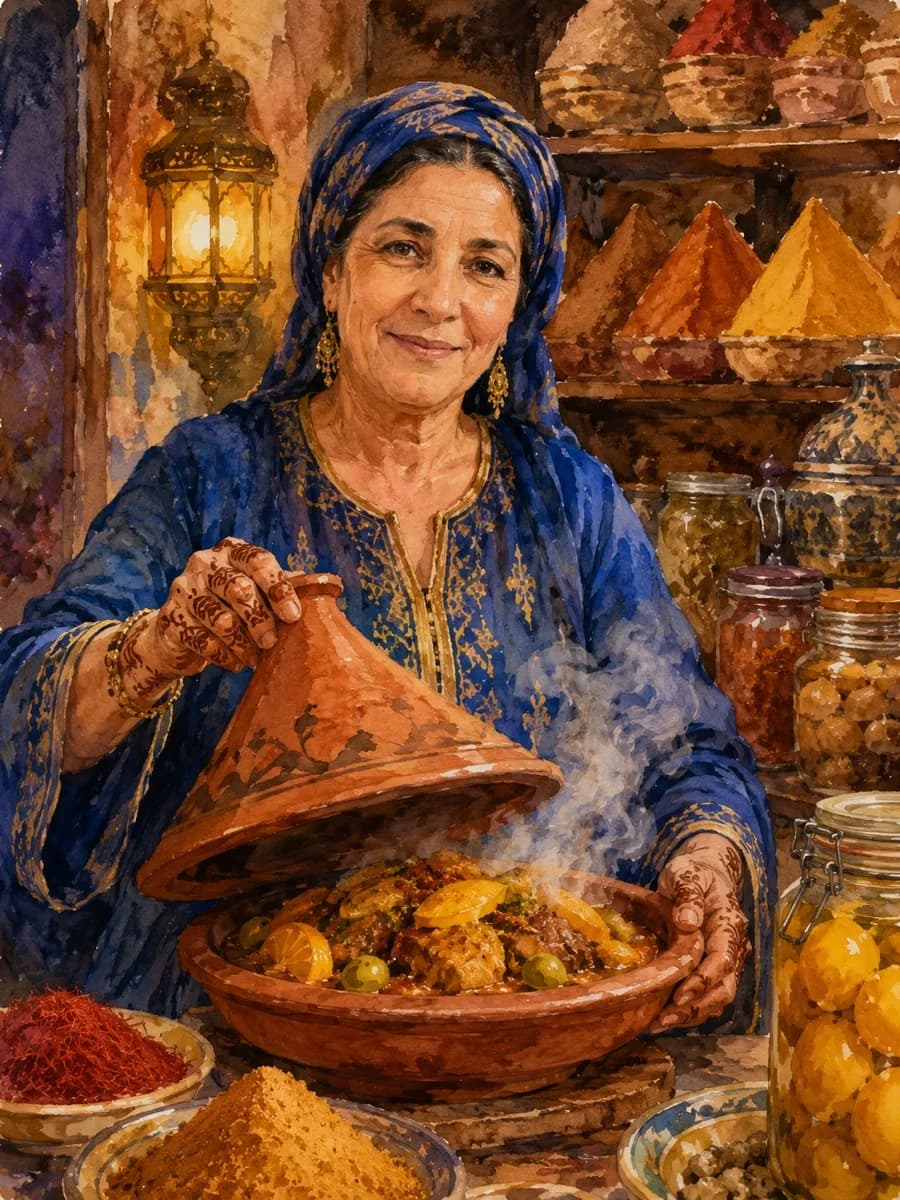
In Fez, we begin preparing harira the morning of Eids and weddings — this is not a soup to rush, my friends. The saffron must bloom slowly in warm water, the onions must caramelize until sweet, and the spices must dance together in the oil before we build anything. When my mother taught me to make this, she said, 'Harira is love made patient.' Every bowl carries that tradition — the warmth of saffron, the brightness of lemon, the depth of slow-cooked comfort.
TagsHariraSlow CookedSaffronCelebration SoupRamadanProtein RichAromatic SpicesLemonThickened Soup
AllergensWheat
Source: generated · June 10, 2026