 Caribbean
Medium · Hot
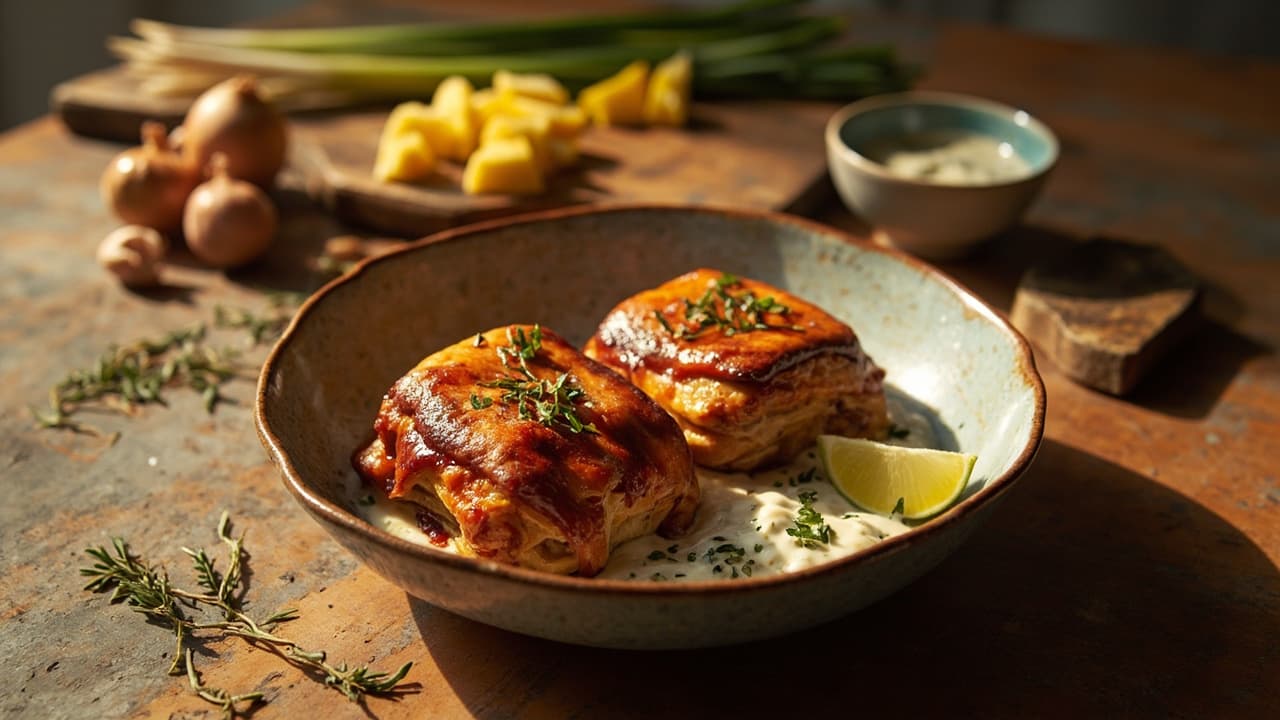
Jerk Glazed Duck Pasty with Smoked Paprika
A soulful Caribbean-British fusion of tender duck encased in flaky pastry, glazed with a fragrant jerk spice blend and smoky paprika, served with cooling yogurt and fresh herbs.

Prep
35 min
Cook
45 min
Total
1h 20m
Method
1
Score the duck skin in a crosshatch pattern without cutting into the meat. Season generously with 1 tsp salt and black pepper on all sides. Let sit at room temperature for 15 minutes while you prepare the jerk glaze.
2
Heat 2 tbsp olive oil in a cast iron Dutch oven over medium heat until shimmering, about 2 minutes. Add diced yellow onion and cook, stirring occasionally, until softened and lightly golden, 5-6 minutes.
3
Stir in minced garlic and sliced scallion; cook until fragrant, 1 minute. Add smoked paprika, cayenne, ground ginger, nutmeg, cloves, cinnamon, and thyme leaves from 4 sprigs. Toast the spices in the oil for 30 seconds until deeply aromatic.
4
5
6
7
8
Remove duck to a cutting board. Let rest 5 minutes, then dice into 1-inch pieces. Reserve the pan glaze in the Dutch oven for assembly.
9
Combine 2.5 cups all-purpose flour and 0.5 tsp salt in a large bowl. Cut in cold butter using your fingers or a pastry cutter until the mixture resembles coarse crumbs with pea-sized pieces. Drizzle in 6 tbsp cold water, mixing with a fork until the dough just comes together.
10
Turn dough onto a floured surface and knead gently 3-4 times until smooth. Divide into 4 equal portions. Shape each into a disc, wrap in plastic, and refrigerate for 15 minutes to rest.
11
12
Spoon 2 tbsp of the reserved pan glaze onto the center of each dough round. Top with diced duck, dividing evenly. Fold the dough up over the filling, pleating the edges and pinching firmly to seal.
13
Place pasties seam-side down on a parchment-lined baking sheet. Brush the tops generously with the reserved 3 tbsp jerk glaze. Bake for 20-22 minutes until the pastry is deeply golden and crisp.
14
Remove from oven and let rest 5 minutes before serving.
15
D
Nutri-Score
Needs balance
A–E · lower is better · score 16
Calories
1440
per serving
High in saturated fat · 55gCalorie-dense · 1440 kcalSource of protein · 57gLow sugar · 16g
Protein
57g
Carbs
84g
Fat
97g
Sat. fat
55g
Fiber
8g
Sugar
16g
Sodium
2581mg
Cardiovascular HealthBalanced MacrosHigh Protein
Nutri-Score is a general nutritional-balance guide, not medical or dietary advice.
E
Environmental impact
Very high impact
A–E · lower is better · includes estimates
kg CO2e
2.9
per serving
ECarbonBEU all-round· carbon sets the grade
Water
1.6m³
Land
128Pt
Runoff
0.4g P
duck drives 78% of this recipe’s estimated footprint.
Carbon from Poore & Nemecek 2018; water, land & runoff from Agribalyse — modelled averages for comparing recipes, not a measurement of your groceries.
Flavor Profile
7
Umami
5
Sweet
5
Salty
4
Sour
1
Bitter
5
Spicy
Textures
CrispyFlakySaucyTender
Aromas
FruityHerbalPungentSmokySpicy
Kitchen Equipment
Primary Tool
Cast Iron Dutch OvenCast Iron Dutch OvenOvenSheet PanChef KnifeCutting BoardMeasuring CupsMeasuring SpoonsMeat ThermometerMixing BowlsPastry CutterRolling PinSilicone BrushFlour For DustingParchment PaperPlastic Wrap
Safety & Storage
High Risk Population
Raw poultry (duck) is a high-risk ingredient requiring strict handling protocols. Pregnant women, young children, elderly, and immunocompromised individuals should ensure duck is cooked to at least 74°C (165°F) internally.
Cooking Temperature
Duck must reach an internal temperature of 74°C (165°F) before being placed in pasties. The completed pasties should be baked at 200°C (400°F) until pastry is golden and crisp.
Cross Contamination
Raw duck juices can cross-contaminate other ingredients. Use separate cutting boards for raw duck, and sanitize all surfaces and utensils after handling raw poultry before preparing other components like the dipping sauce.
Storage
Refrigerate leftover pasties within 2 hours of cooking. Store in airtight containers at 4°C (40°F) or below for up to 3 days. The yogurt dipping sauce should be used within 2 days and kept refrigerated.
Handling
The 15-minute room temperature rest for scored duck before cooking is acceptable. Do not exceed this time. Always wash hands thoroughly with soap after handling raw duck.
Allergen Warning
This recipe contains gluten and dairy. Verify that chicken broth does not contain hidden allergens such as fish or shellfish if serving to individuals with these allergies.
Pro Tips
Technique
When scoring that duck skin, you're not just cutting—you're opening doors for the fat to escape and the spices to enter. Cut deep enough to reach the meat but never through it. This is the difference between crispy skin and chewy disappointment.
Substitution
No duck? Chicken thighs will hold the glaze just fine, but give them an extra 10 minutes in the pan. The meat needs that time to drink in the jerk before it goes into the pastry.
From the chef
Duck and jerk spice were made for each other — the rendered skin takes the allspice, cayenne, and pineapple glaze with deep conviction, and tucking all of that into golden flaky pastry is pure joy, a Caribbean-British handshake that makes quiet, happy sense. The skin sears until it sings, the braise tightens the jerk glaze into something glossy and fragrant, and each pasty holds the filling like a love letter sealed in crust. Cool yogurt and fresh thyme meet every bite at the end, balancing the fire with something gentle.
TagsAromatic
AllergensWheatGlutenMilk
Source: generated · June 12, 2026